
11 — Licence
Every Yavi theme needs a licence key. Without a valid licence the extension does not work.
The two fields
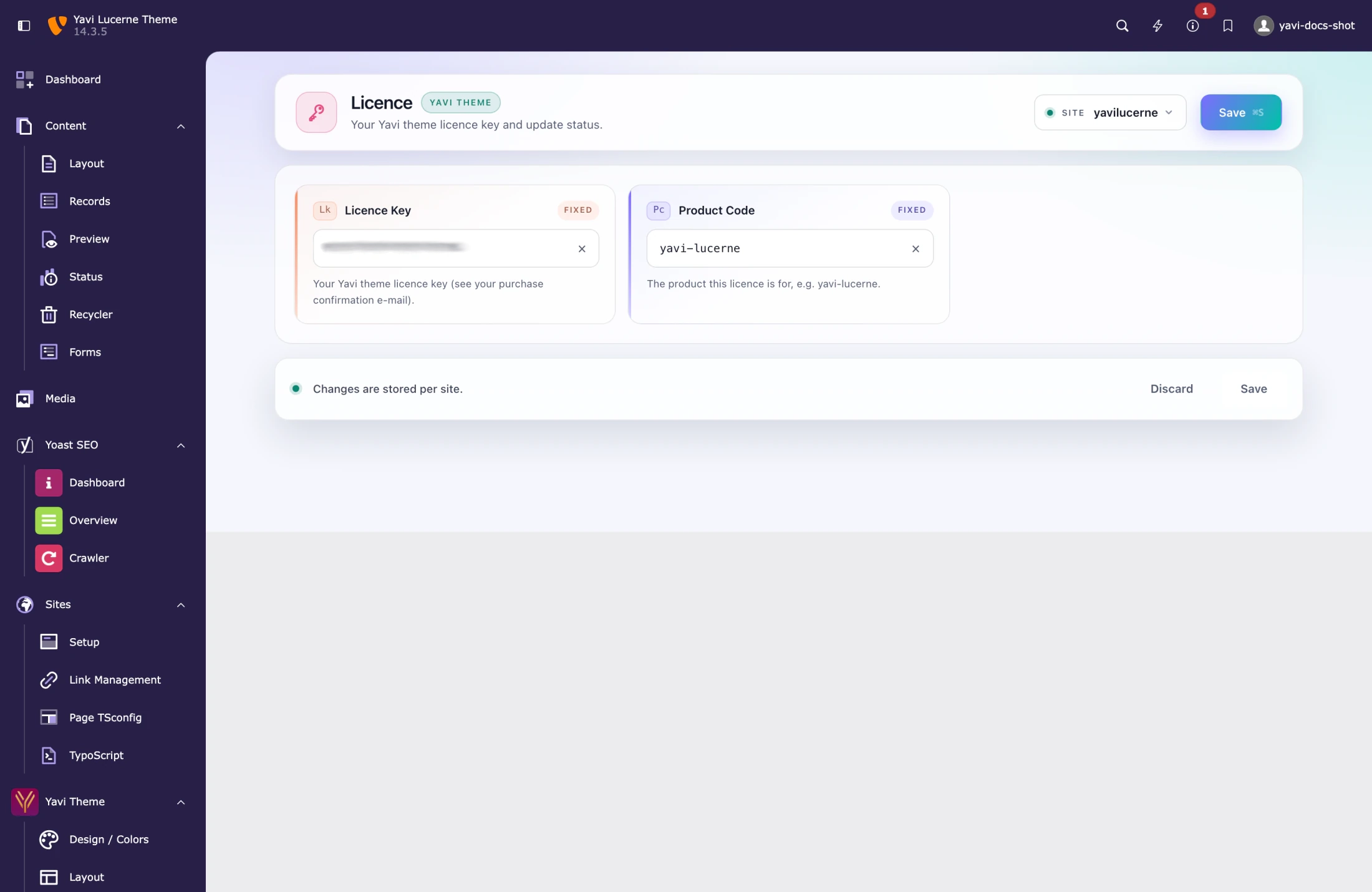
Yavi Theme → Licence:
| Field | Setting key | Example |
|---|---|---|
| Licence Key | licence.key | XXXX-XXXX-XXXX-XXXX |
| Product Code | licence.product | yavi-lucerne |
Both are required. The product code says which product the key is for — a key only unlocks the theme it was issued for.
The key is in your purchase confirmation e-mail and, at any time, in the customer login at licence.yavithemes.com under Konto → Lizenzen. That page also lists the domains a key is currently bound to, and lets you release one when a site moves.
On a fresh DDEV installation you can have the key written in for you — set LICENCE_KEY in the environment file before running init-yavi.sh, see 03 — Installation with DDEV.
The licence page shows the current status after saving.
Updates
The Updates until date on the portal's Downloads page is not the licence itself: it governs whether new versions are still offered for download. See 03 — Installation with DDEV.
You do not have to watch the portal for it. From yavi-core 1.3.0 on, the backend tells you itself:
- Licence page — a notice appears when a newer version is available, naming it and the one you are running.
- Dashboard widget — Yavi framework, addable through Add widget in the General group. It shows the installed version, whether something newer is waiting, and links straight to your downloads.
Both read what the daily licence check brought back; neither contacts anything on its own. A fresh installation therefore shows no update information yet until that check has run once — saving the Licence page triggers it immediately. Both are silent while you run the newest version your licence offers.
After entering the key
Save, then flush the cache:
vendor/bin/typo3 cache:flushMoving a site to another domain
The licence is bound to a domain. After a move — staging → production, or a domain change — open the licence page once and save. That triggers a fresh check for the new host.
Development and staging
Give staging and development environments their own licence. There is no "development mode" that bypasses the check — that would be a hole in the licensing, not a feature.